
Piano Scales Explained: The Comprehensive Guide for Beginners

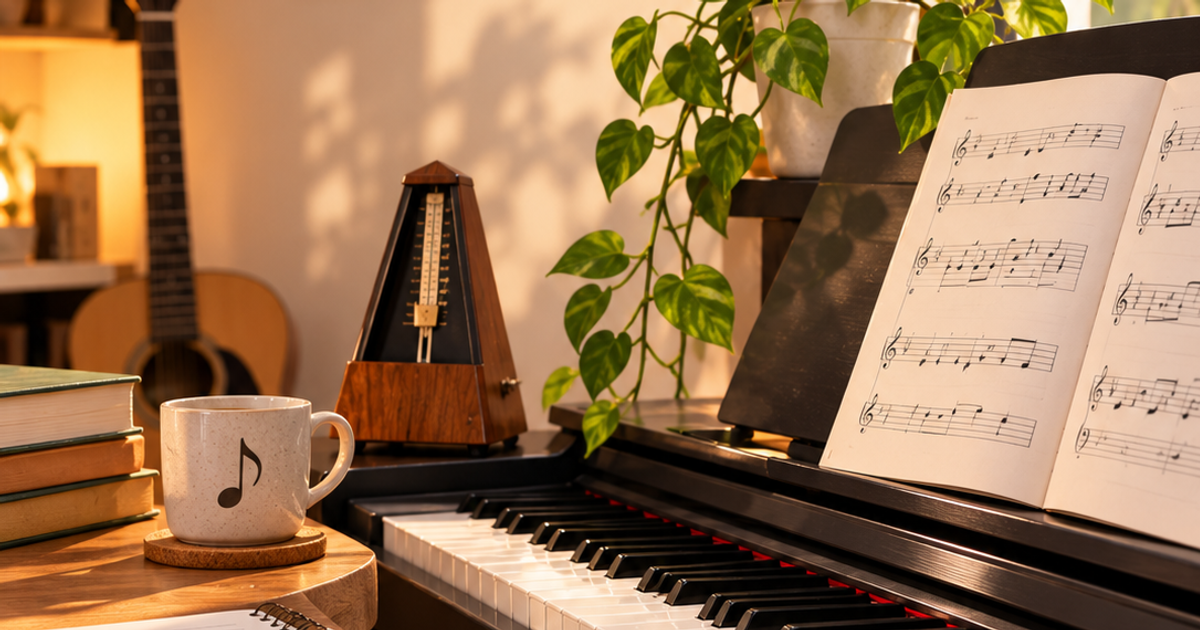
You already know that learning to play the piano involves pressing the right keys in the correct order. However, without a solid grasp of how those keys connect, you will likely struggle with finger speed, reading sheet music, and learning new songs efficiently. In this complete guide, you will learn exactly what piano scales are, the essential formulas behind them, and the top beginner scales to practice for immediate improvement.
Key Takeaways
- Piano scales are specific sequences of notes played in ascending or descending order based on a set pattern of musical intervals.
- Practicing scales builds crucial finger dexterity, improves hand coordination, and provides the necessary foundation for understanding music theory.
- The major scale formula consists of a universal pattern of whole steps and half steps: Whole-Whole-Half-Whole-Whole-Whole-Half.
- C Major is the ideal first scale for beginners to learn because it uses only the white keys on the piano keyboard.
- Proper fingering technique, such as the thumb tuck, is essential for playing scales smoothly and preventing hand strain.
- Daily repetition with a metronome develops long-term muscle memory and steady rhythm for faster overall progression.
What Are Piano Scales and How Do They Work?
A piano scale is a specific sequence of musical notes arranged in ascending or descending order by pitch, based on a fixed pattern of intervals. Fundamentally, these structural patterns act as the alphabet of music. For example, just as individual letters combine to form readable words, scale notes combine to build chords and melodies. Consequently, mastering them naturally introduces you to music theory basics.
What Is the Difference Between a Half Step and a Whole Step?
A half step is the smallest musical interval in Western music, moving directly from one key to the very next available key. First, consider the transition from a white key to an adjacent black key. For example, moving from C to C-sharp is exactly one half step. Meanwhile, a whole step consists of two half steps combined. By understanding piano keys, you will notice that moving from C to D is a whole step because it skips the black key entirely.
Why Are Piano Scales Important for Beginners to Learn?
Learning piano scales matters for beginners because it builds crucial finger dexterity, trains the ear, and accelerates the ability to read sheet music. Research shows that 90% of adults quit playing piano within their first six months, largely due to a lack of structured technical practice.
Furthermore, practicing scales actively trains your brain to recognize musical patterns on the page. After 20 days of intensive music-based training, 90% of children exhibit measurable improvements in verbal intelligence and executive function. For example, when reading piano sheet music, knowing the key of G major tells your brain to expect an F-sharp automatically.
What Is the Universal Formula for a Major Piano Scale?
The major scale formula involves a sequence of whole steps and half steps in the following exact order: Whole, Whole, Half, Whole, Whole, Whole, Half. Simply put, this strict mathematical sequence applies to any starting note on the keyboard. For example, starting on the note D and following this exact interval sequence perfectly builds the D major scale.
What Is the Difference Between Major and Minor Piano Scales?
Major scales are typically bright and uplifting, whereas minor scales sound darker and more melancholic. Technically, the minor scale creates this emotional shift by using a modified formula: Whole, Half, Whole, Whole, Half, Whole, Whole. For example, playing C major sounds joyful, while playing C minor sounds highly dramatic. This contrast becomes incredibly vital when you begin learning basic piano chords.
Which Piano Scales Should Beginners Learn First?
Beginners should start by learning the C Major, G Major, D Major, A Minor, and E Minor piano scales because they introduce basic fingering concepts without overwhelming complexity. Specifically, the C Major piano scale is the most common starting point for beginners because it consists entirely of the natural white keys, requiring no sharps or flats. Next, you can safely progress to scales with just one or two black keys.
| Scale Name | Notes Included | Key Signature | Best Application |
|---|---|---|---|
| C Major | C, D, E, F, G, A, B, C | No Sharps or Flats | Complete beginners |
| G Major | G, A, B, C, D, E, F#, G | 1 Sharp (F#) | Introducing black keys |
| D Major | D, E, F#, G, A, B, C#, D | 2 Sharps(F#,C#) | Building finger strength |
| A Minor | A, B, C, D, E, F, G, A | No Sharps or Flats | Learning minor tonality |
| E Minor | E, F#, G, A, B, C, D, E | 1 Sharp (F#) | Minor scale transitions |
Here is a quick breakdown of the top 5 scales for beginners:
How Do You Use Proper Fingering for Piano Scales?
Proper piano scale fingering involves using the "thumb tuck" technique to pass the thumb under the middle or ring finger to smoothly transition the hand up the keyboard. This clever physical mechanic allows you to comfortably play sequences longer than your five fingers. For example, when playing C Major with the right hand, you play notes C-D-E with fingers 1-2-3, and then tuck your thumb under to strike F.
Additionally, returning down the keyboard requires the opposite "finger crossover" method. As such, your middle or ring finger gracefully crosses over the planted thumb to continue descending. Mastering these piano finger exercises ensures your playing remains beautifully fluid. Finally, maintaining proper piano posture with curved fingers prevents unnecessary wrist strain during these maneuvers.
What Tools and Resources Help with Scale Practice?
Metronomes, fingering chart PDFs, and digital practice apps are the best tools for consistently tracking your scale progress. First, using a metronome strictly forces you to play evenly, which builds long-term rhythmic discipline. For example, setting a metronome to a slow 60 BPM ensures you do not accidentally rush the harder sections of a scale.
Moreover, visual aids dramatically speed up the early learning curve. Consequently, keeping a printed fingering chart directly on your music stand removes all guesswork from your daily practice. You can also explore the best piano learning apps to receive real-time feedback on your physical accuracy.
How Can Beginners Practice Piano Scales Effectively?
Beginners can practice piano scales effectively by building a consistent 10-minute daily routine that focuses on slow, accurate repetitions rather than speed. Consistency yields massive cognitive and technical benefits; students who participate in structured music lessons experience a 63% greater increase in full-scale IQ compared to those who do not.
To start, dedicate your first five minutes to playing just one scale very slowly, hands separately. Next, try playing that exact same scale with both hands together for the remaining five minutes. By diligently following a daily piano practice routine, you will develop permanent muscle memory much faster than practicing erratically once a week.

ChordsCraft Music Editorial Team
Start Your Musical Journey Today
Experience 1-on-1 personalized lessons with certified music and dance instructors. Pick your instrument, choose your schedule, and get structured guidance.
Recommended Reading
 🎹Piano
Piano vs Keyboard: What's the Difference? A Beginner's Guide
Piano or keyboard which should you learn first ? Compare their sound, keys, features, cost and learning benefits to choose the right instrument for your musical goals and budget.
 🎹Piano
Piano Arpeggios Explained: How to Play and Practise Them
Learn what piano arpeggios are, how they work and how to practise them effectively. This beginner-friendly guide covers arpeggio patterns, finger technique, common types and practical exercises for smoother, more confident piano playing.
 🎹Piano
Best Keyboard for Beginners in 2026: The Complete Buyer's Guide to Choosing the Right Keyboard
Looking for the best keyboard for beginners in 2026? Compare top models, features, prices, and expert buying advice from ChordsCraft Institute of Music.
