Piano vs Keyboard: What's the Difference? A Beginner's Guide

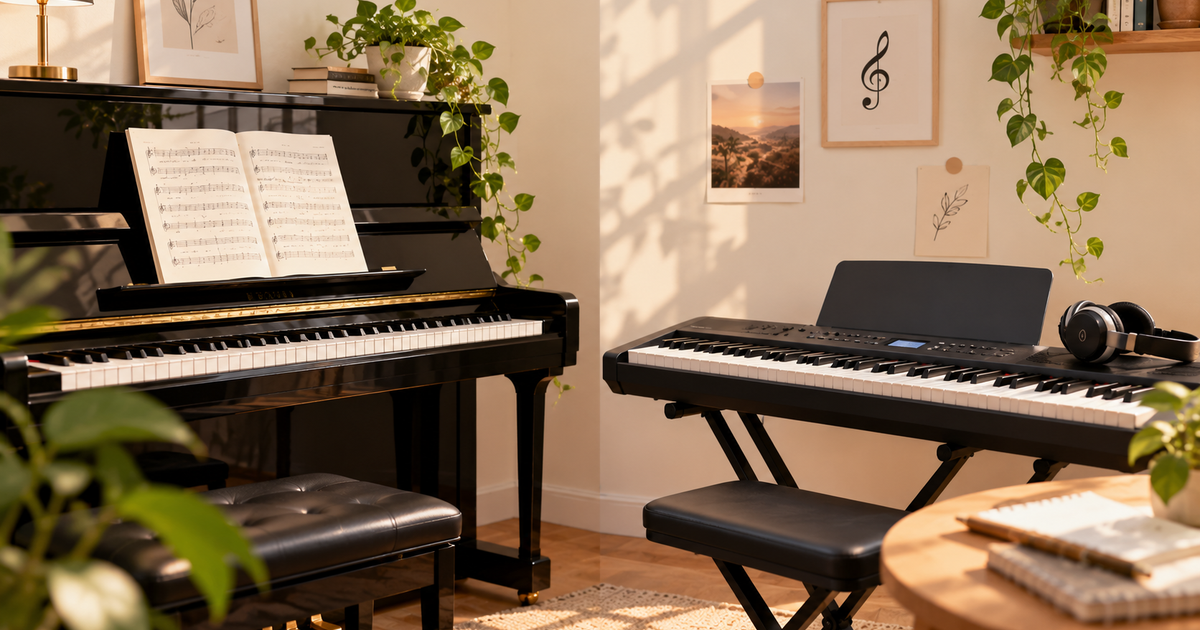
If you are planning to learn piano, one of the first questions you may face is whether you should start with a piano or a keyboard. The two instruments look similar and share the same basic note layout, but they are designed with different playing experiences in mind. The right starting point depends on what you want to learn, the type of music you want to play, your space, budget, and how seriously you want to develop piano technique.
Piano vs Keyboard: What Is the Difference?
A piano is primarily designed to reproduce the playing experience of a traditional piano. Acoustic pianos use hammers and strings, while digital pianos use electronic sounds and often reproduce the resistance and response of acoustic piano keys.
A keyboard is generally more versatile. Many keyboards offer different instrument sounds, rhythms, accompaniment functions, recording features and connectivity options. They can be useful for beginners interested in experimenting with different styles of music.
The important point is that "keyboard" and "piano" are not always interchangeable. A basic 61-key keyboard and an 88-key weighted digital piano can both have piano sounds, but they can feel very different when you play them.
| Feature | Piano / Digital Piano | Keyboard |
|---|---|---|
| Typical key range | Often 88 keys | Commonly 61 or 76 keys, though options vary |
| Key feel | Acoustic or weighted/hammer action on many digital pianos | Often lighter; some models are semi-weighted or touch-sensitive |
| Sounds | Mainly piano-focused | Often includes many instrument sounds |
| Portability | Digital models can be portable; acoustic pianos are not | Usually easier to move |
| Features | Focuses on piano playing | Often includes rhythms, effects and accompaniment |
| Best suited to | Piano technique, classical, graded study and piano repertoire | Exploring sounds, accompaniment, pop and general keyboard playing |
Piano vs Keyboard: Key Differences
There is no universal rule that every beginner must start with an 88-key instrument. In recent beginner discussions, learners have asked whether 61 keys are enough, whether weighted keys are necessary and whether a basic keyboard can be used before upgrading. The answers vary depending on the learner's goals
Can You Learn Piano on a Keyboard?
Yes, you can learn many piano fundamentals on a keyboard. You can learn note names, basic chords, rhythm, finger coordination, melodies, simple songs and music theory on a keyboard.
The limitation is that the playing experience may differ from a traditional or weighted piano. Weighted keys provide greater resistance and a different response under the fingers, which becomes more relevant as you develop technique and dynamics.
This is one reason beginners often ask whether starting on an inexpensive keyboard will create problems later. Recent discussions show that some learners successfully begin on simpler keyboards and upgrade later, while others prefer weighted keys from the beginning, particularly when their goal is serious piano study.
So, if a basic keyboard is the instrument you currently have, that does not mean you should wait months before learning. Starting with the instrument you can consistently practise is often more useful than owning the perfect instrument but rarely playing it.
How Many Keys Does a Beginner Need?
The number of keys you need depends on what you plan to play.
A smaller keyboard can be enough for:
- Learning note names
- Basic chords
- Simple melodies
- Beginner exercises
- Playing many popular songs
- Exploring music before committing to a larger instrument
An 88-key instrument becomes more useful when you want to develop a broader piano range, practise more advanced repertoire, or prepare for formal piano study. The idea that every beginner absolutely needs 88 keys is not universally supported. Even recent beginner discussions contain different views on whether a full 88-key range is necessary at the beginning.
What Are Weighted Keys and Why Do They Matter?
Weighted keys are designed to provide resistance that is closer to the feel of an acoustic piano. This allows the player to develop greater control over how strongly and quickly notes are played.
For beginners who eventually want to focus seriously on piano, weighted or hammer-action keys can become increasingly useful. They can help make the transition to acoustic piano feel more familiar.
However, that does not mean an unweighted keyboard makes learning impossible. A beginner can still work on musical concepts, coordination and repertoire with a simpler keyboard.
The bigger question is therefore not simply:
"Are weighted keys good?"
It is:
"What are you trying to learn?"
If your goal is primarily piano technique and classical or graded study, the playing action matters more. If your goal is songwriting, accompaniment, pop arrangements or experimenting with different sounds, keyboard features may be more important.
Is Keyboard Easier to Learn Than Piano?
Not necessarily.
The basic musical concepts overlap, but the instruments can encourage different playing approaches. A keyboard may feel lighter and offer features that make experimentation easier. A piano-focused instrument places greater emphasis on touch, dynamics, coordination and piano technique.
The difficulty also depends on your learning goal.
Learning a simple chord progression on a keyboard may be relatively accessible. Developing control, reading music, playing with both hands and performing advanced piano repertoire requires considerably more practice.
Can You Teach Yourself Piano on a Keyboard?
You can certainly begin learning independently.
Beginners can use books, videos, apps and online resources to understand:
- Notes and keyboard layout
- Basic chords
- Scales
- Rhythm
- Simple songs
- Music theory
The challenge is structure and feedback. When you learn entirely by yourself, it can be difficult to recognise inefficient fingering, posture issues, timing problems or gaps in your understanding.
That is where structured lessons can help. A teacher can adapt exercises and repertoire to your current level instead of giving you the same sequence of material regardless of how you are progressing.
How Long Does It Take to Learn Keyboard?
There is no fixed three-month rule for learning keyboard or piano.
Your progress depends on how often you practise, what you are learning, your previous musical experience and your goals.
A learner focusing on simple songs and chords may reach useful playing ability relatively quickly. Someone working toward formal examinations or advanced repertoire will need a longer and more structured progression.
Consistency matters more than trying to rush through a fixed timeline.
Piano or Keyboard: What Should a Beginner Start With?
Think about your goal first.
Choose a piano-focused instrument if you want to:
- Develop traditional piano technique
- Study classical repertoire
- Work toward graded examinations
- Build long-term piano skills
- Focus on touch and dynamics
A keyboard can be a practical starting point if you want to:
- Learn basic keyboard skills
- Play popular songs
- Experiment with different sounds
- Accompany singing
- Start learning without making a large initial investment
The most important thing is to begin learning rather than getting stuck trying to find the "perfect" instrument.
Frequently Asked Questions
Start Learning Piano or Keyboard With a Structured Path
Whether you begin with a keyboard or piano, the instrument is only one part of learning. Building correct technique, understanding music, practising consistently and progressing through suitable material are equally important.
For learners who want personalised instruction, ChordsCraft's Piano Lessons provide live 1-on-1 learning from beginner through advanced levels, with options for hobby learning, popular music and certification-oriented study.
Related Music Courses
Classical & Modern Piano
Learn piano with graded ABRSM/Trinity curriculums from certified instructors.
Electronic Keyboard
Play synth leads, pop chords, and learn keyboard arrangements step-by-step.
Bollywood Vocals Academy
Sing your favorite Bollywood hits with expression, ornamentation, and style.
ChordsCraft Music Editorial Team
Start Your Musical Journey Today
Experience 1-on-1 personalized lessons with certified music and dance instructors. Pick your instrument, choose your schedule, and get structured guidance.
Recommended Reading
 🎹Piano
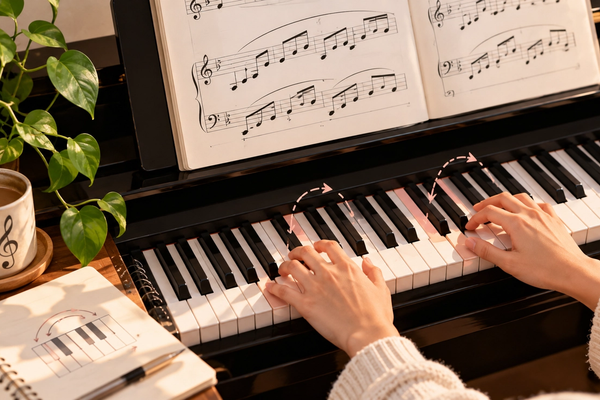
Piano Arpeggios Explained: How to Play and Practise Them
Learn what piano arpeggios are, how they work and how to practise them effectively. This beginner-friendly guide covers arpeggio patterns, finger technique, common types and practical exercises for smoother, more confident piano playing.
 🎹Piano
Piano Scales Explained: The Comprehensive Guide for Beginners
Learn piano scales from the ground up with this beginner-friendly guide. Discover major and minor scales, how scales work, why they matter, and how practising them can improve your piano technique and music theory.
 🎹Piano
Best Keyboard for Beginners in 2026: The Complete Buyer's Guide to Choosing the Right Keyboard
Looking for the best keyboard for beginners in 2026? Compare top models, features, prices, and expert buying advice from ChordsCraft Institute of Music.
